
Table of Contents
AI is no longer just hype or a futuristic promise. By 2026, people actively use AI in their daily lives and work.
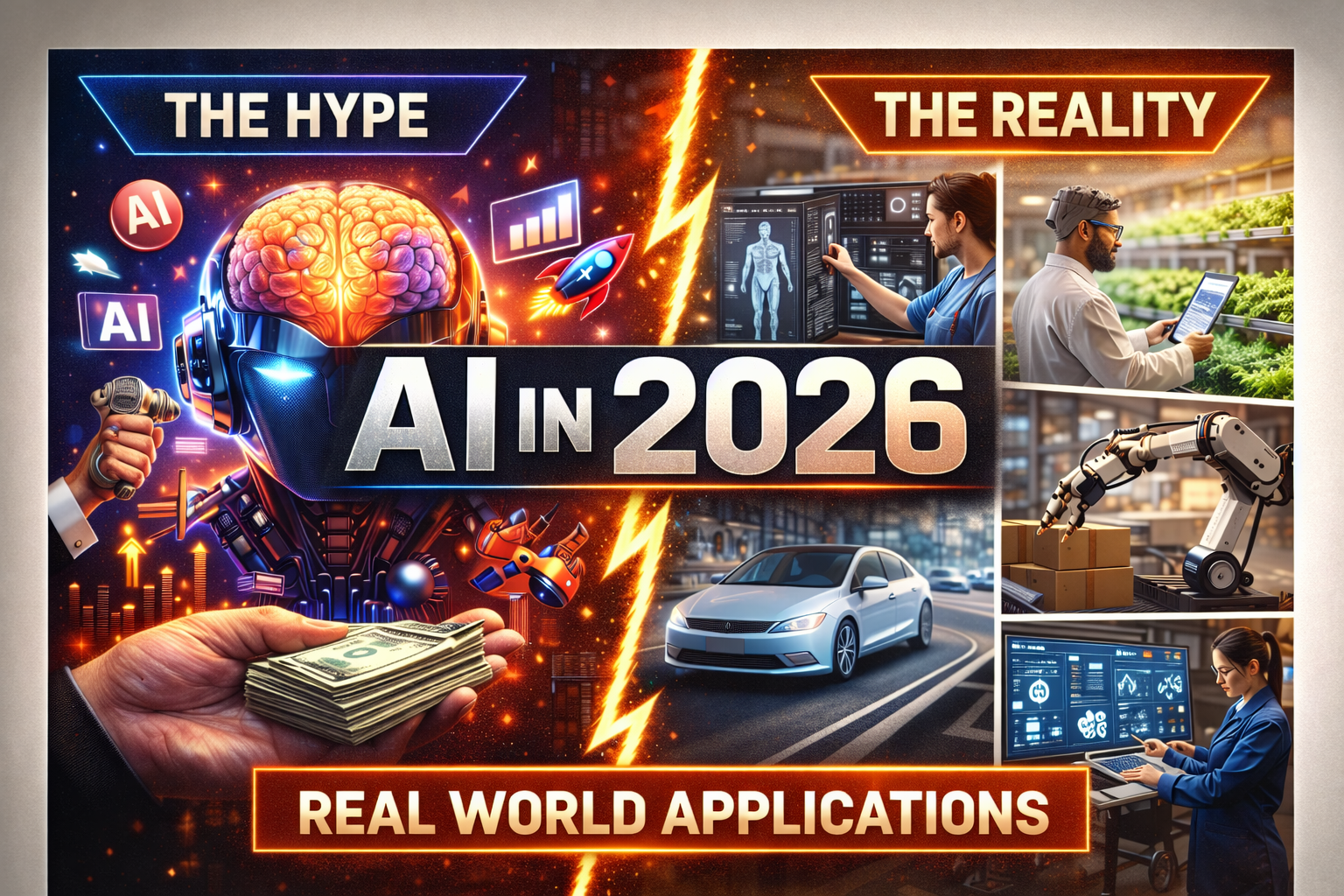
In the past few years, AI mainly focused on hype. Companies showcased smart robots, human-like chatbots, and bold promises about machines that would change everything. Many businesses rushed to promote and adopt AI even when the technology was not ready for real-world use. People often called this period the “AI hype phase.”
By 2026, the focus has clearly shifted from hype to practical use. Businesses and individuals now use AI to solve real problems instead of showing off demos. Companies rely on AI to write emails, analyze data, improve customer support, detect fraud, and automate repetitive office tasks. Doctors use AI to help read medical reports, and students use it for learning and research.
This shift has also made companies more realistic and careful. Instead of asking, “Can we use AI?” they now ask, “Does AI save time, reduce costs, or improve results?” Businesses adopt only AI tools that deliver real value and remove those that fail to perform.
Today, many AI tools and products help people solve everyday problems. These practical tools help users work faster, smarter, and more efficiently in their daily routines.
Major Changes AI Will Bring in 2026
- AI automates repetitive work, helping people complete tasks faster and more efficiently rather than replacing jobs.
- AI-powered assistants manage customer support, emails, and routine business tasks. For example, Hostinger uses its own chatbot, Kodee, which many users rely on to clear doubts and access information.
- AI tutors transform education by offering personalized learning experiences for each student.
- AI improves healthcare by helping doctors detect diseases earlier and manage patient data more accurately.
- AI speeds up content creation by assisting with writing, editing, and design.
- Small businesses use AI to compete with large companies by automating marketing and daily operations.
- Search engines move beyond simple links and deliver direct, AI-powered answers.
- Everyday apps and smartphones integrate AI, allowing it to work quietly in the background.
- Governments introduce stronger AI regulations to ensure safety, transparency, and data privacy.
Overall, AI in 2026 moves from hype to reliable, real-world impact. This period marks the moment when people truly understand AI’s potential and start using it in everyday life—just like the internet and smartphones today.