
Why OpenAI Is Reducing Revenue Sharing with Partners – And What It Means for the Future of AI
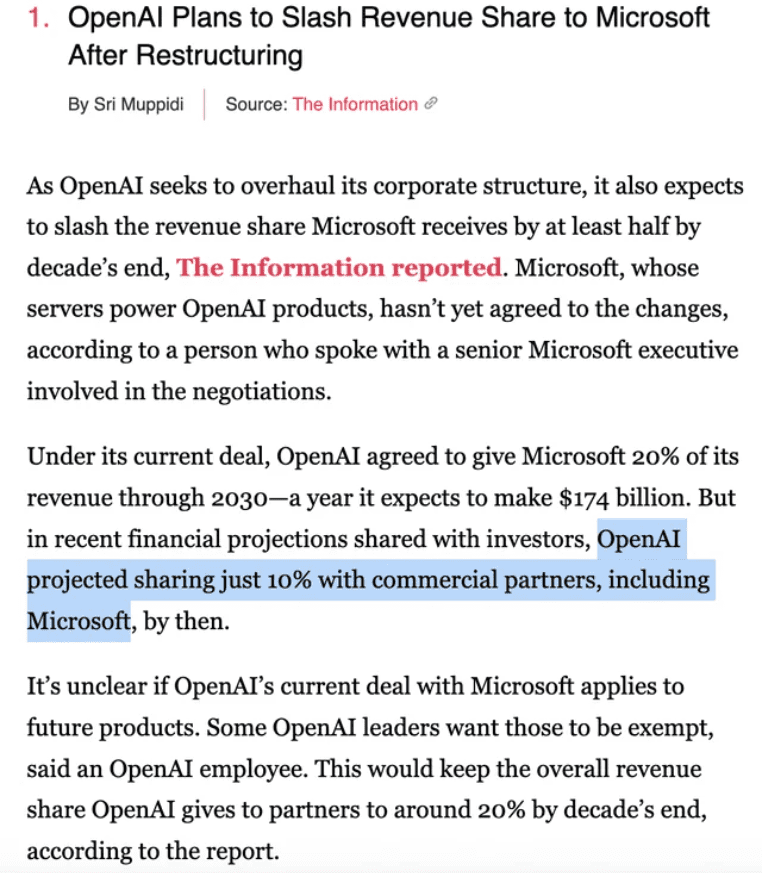
OpenAI, the company behind the popular AI service ChatGPT, is making a big change in how it shares its revenue with commercial partners like Microsoft. Until now, OpenAI has shared about 20% of its revenue with these partners. But by 2030, this will drop sharply to just 8%.
So, why is OpenAI making this change?
Over the past few years, OpenAI’s technology has become incredibly popular. ChatGPT is no longer just a fun chatbot for curious users – businesses around the world are now using OpenAI’s tools in customer service, content creation, and many other areas. Because of this growing success, OpenAI is now in a much stronger position. It doesn’t need to share as much of its revenue to keep partners interested. Instead, the company wants to keep more money for itself, so it can invest more in developing new and powerful AI technologies.
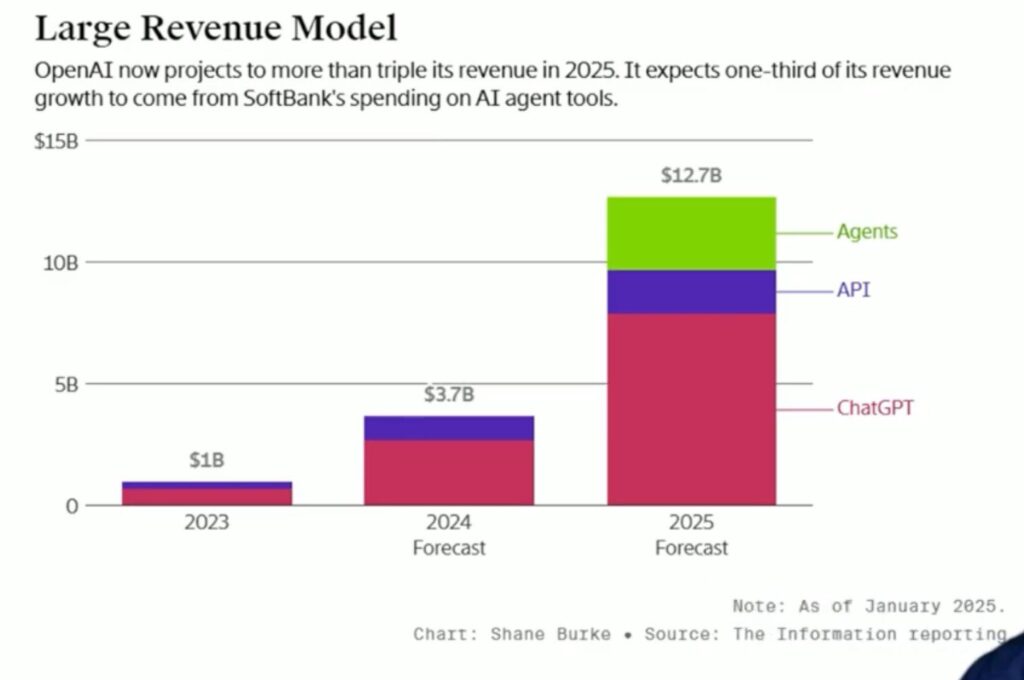
In fact, OpenAI is already seeing huge financial success. According to recent reports, OpenAI has reached $12 billion in annualized OpenAI revenue in 2025. With so many companies integrating ChatGPT and other OpenAI services into their products, the demand is growing fast. OpenAI expects that reducing the revenue share to partners will lead to over $50 billion more in OpenAI revenue over the coming years.
What does this mean for the future?
For companies like Microsoft, it means they will get a smaller slice of the pie. This could change how they plan their partnerships and investments in AI. For OpenAI, it means having more resources to improve its services and expand into new markets. The company’s confidence in its own technology is clear – they are no longer dependent on partners the way they once were.
Will OpenAI really reach these revenue goals?
While no one can predict the future exactly, the trend is strong. AI is becoming a key part of how businesses operate, and tools like ChatGPT are leading the way. Many experts believe this shift will continue as more industries adopt AI-powered solutions, boosting OpenAI revenue further.